The museum is the school.
Try a lesson: Behind the Negative
A free grade 8 lesson, no sign-in. Read a 1940s Library of Congress photograph in five steps, then decide which SI restoration of it you trust. This is how every lesson in the museum school runs: a room of real evidence, a question, and an argument you can defend.

Behind the Negative
Three objectives: source a photograph at the Library of Congress, use SI with images, and learn how SI can make a fake.
- 1 · ThemeWhat is this picture about?
- 2 · SceneWho is here, where, and what is happening?
- 3 · AgeWhen was it made, and how old is this copy?
- 4 · RecordWhat does the archive say?
- 5 · CorrectionsWhat did a restoration keep, and what did it make up?
The five-step card students keep beside them for every source.
The teaching strategy: docents
A docent here is a unique bot, programmed to both the museum program and your child.
- Notes pass from one docent to the next.Every docent leaves short instructional notes. The next bot reads them and uses them to customize its approach to your student.
- No lost days.Gone are teachers who are sick, distracted by other school duties, or struggling to stay on top of 30 students in five sections. Certified teachers review problems arising from the classroom.
- A class of one, or of 1,000.Our bots can handle either. It makes no difference.
- Trained for today’s learners.Our bots have trained under LLMs and the latest pedagogy: not for yesteryear, but for today’s learners.
Let’s face it: kids don’t learn only in 47 minutes
The bell system was borrowed from the industrial revolution: bells ring for the end of class to provide the pre-programmed lesson for the whole class. Five illustrations follow. They are invented composites, not real classrooms or real people.
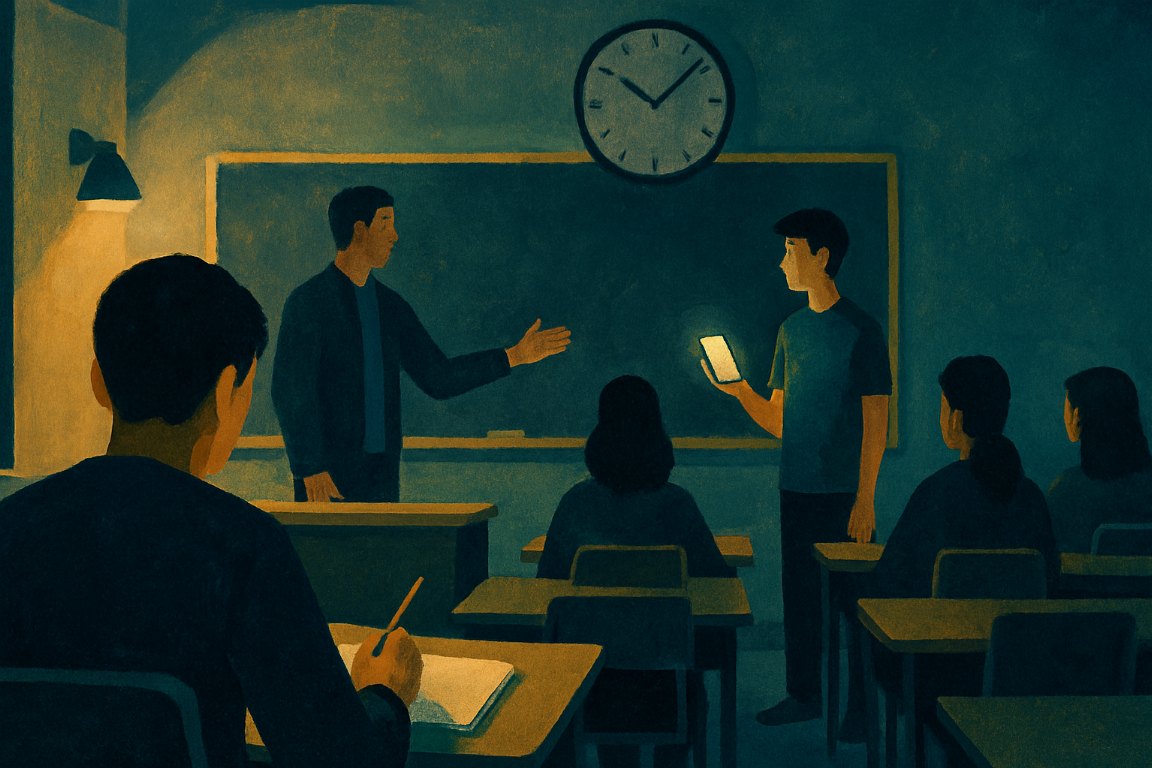
Ten minutes for one phone
A ninth-grade algebra class opens with a standoff over a phone. Two more interruptions follow. By the bell, less than half the period went to algebra, and the student who came ready to work got the same half as everyone else.
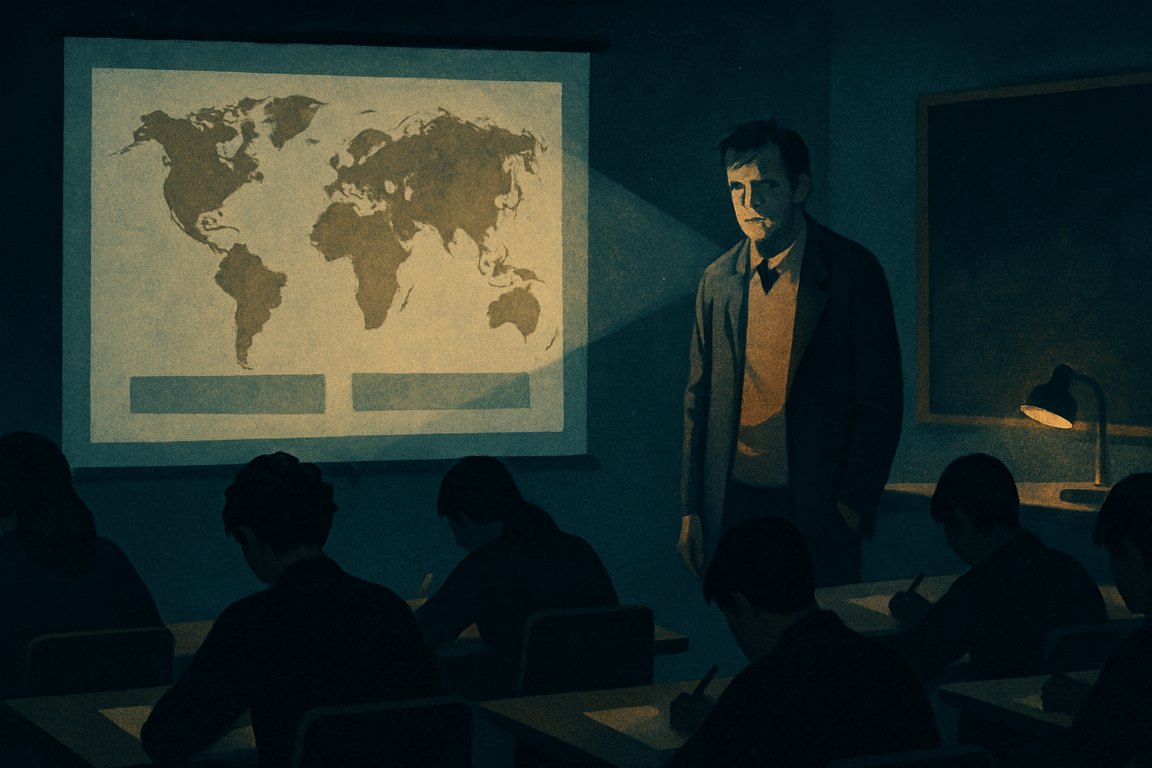
Last year’s slides
A teacher with three courses to prepare pulls last year’s slides the night before. The lecture runs long, the questions never come, and the class copies notes on a treaty that no one was asked to think about.
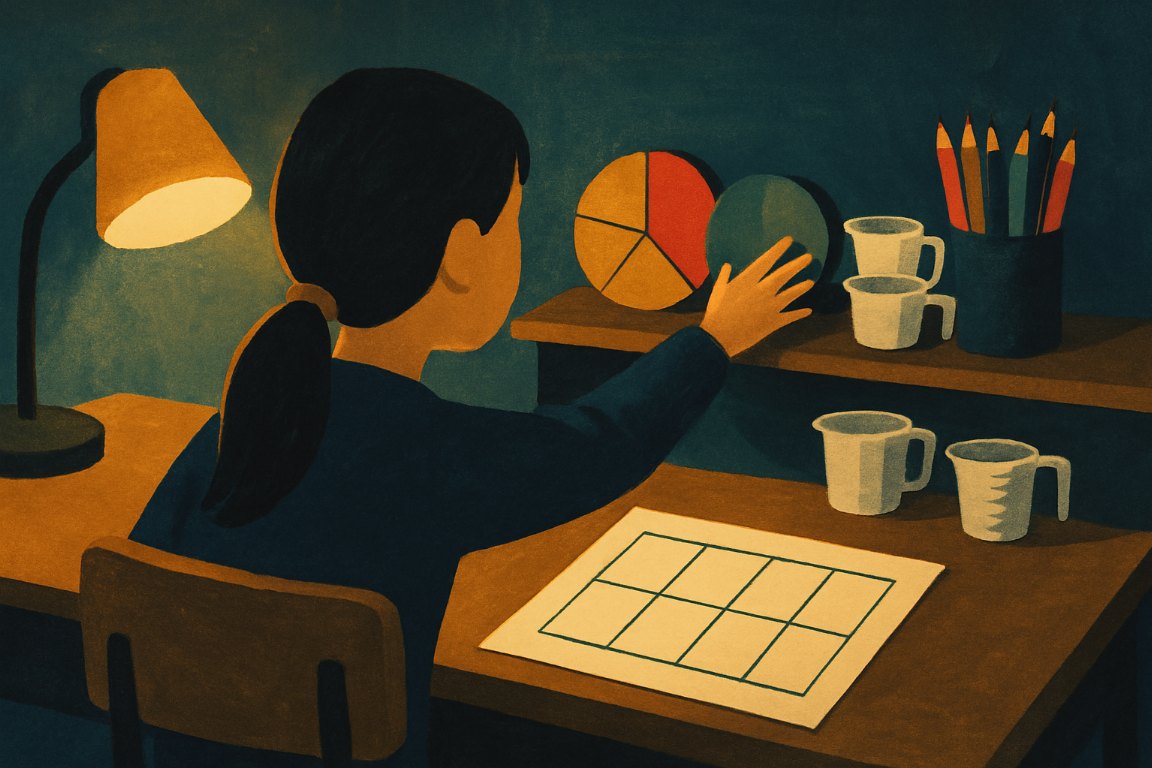
One way in
A fifth grader understands fractions when she can handle them and draw them. She gets them as a worksheet, and is marked behind. The lesson had one way in, and it was not hers.
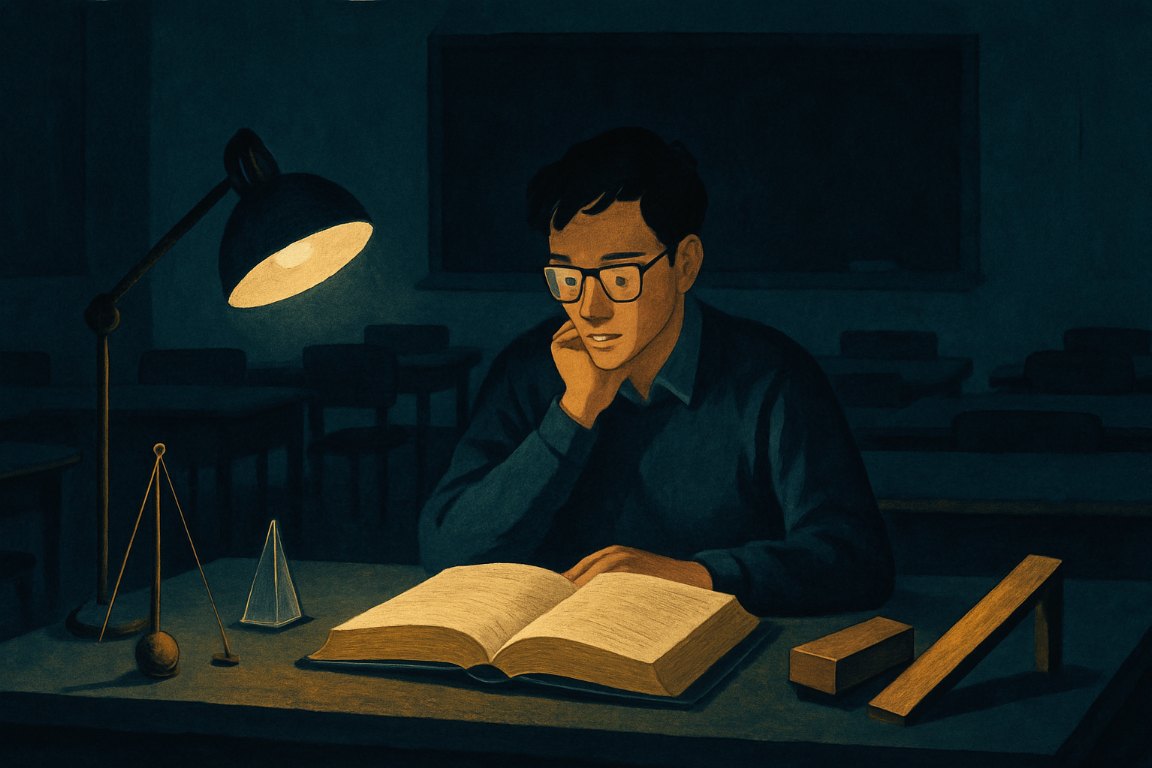
One chapter ahead
A school short a physics teacher gives the course to a first-year teacher certified in biology. He stays one chapter ahead of the class all year. The students can tell.
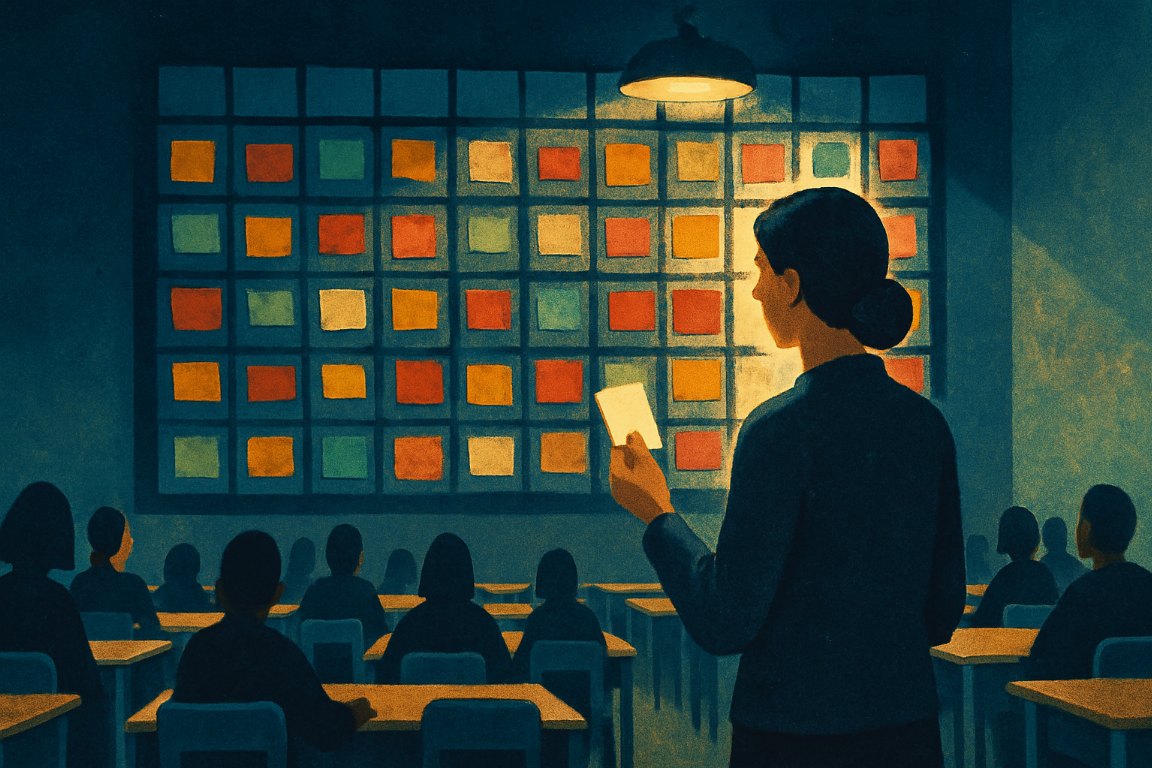
No day left on the calendar
A strong teacher has 34 students, a pacing calendar set by the district, two weeks of testing and an assembly on Thursday. She knows which students need another day on the unit. The calendar does not have one.
Games are a strategy here, built into the learning and the assessment
A game here is not an arcade and not a break from the lesson. It is part of the lesson: it draws the student into a real problem, and it is one of the ways a student shows what they understand. Two from each subject, across the grades.
Walk the Line
A number is a place before it is a quantity; estimating and measuring position; negatives as places below zero
The Proof Room
A correct number is not yet a claim; proof order (Elements I.32); triangle congruence (I.8); reason in every row
Mixing Bench
Early chemistry reasoning — what mixes, what changes.
The Accelerating Present
The post-1950 acceleration: carbon accounting, machine-speed learning, gene editing, the Anthropocene debate, and the next threshold as decision.
Raised to Spec
Reading specifications; why surplus needed guarding, counting and sealing; quay logistics; lake-city engineering
The Code Shop
The Code Shop — a program is an instruction that cannot be misunderstood, and why that is hard to achieve.
Market Day
Price as information — what the crowd knows.
Fork the Century
Counterfactual reasoning — contingency in history.
The nine museums
A building opens its door here the day it is published. The others are still being built.
The Museum of Everyday Living
Rooms, tools, tables and beds: how ordinary life was actually lived.
The City
Streets, towers, and the people who stack themselves a hundred floors high.
Revolutionary Change
Revolutionary change: the machines, the crowds, and the ideas that turned the world over.
The Golden Age of Piracy
The sea between two ports, and the outlaws who ran the water between them. Ships, weapons, and the law’s long reach.
The Museum of Society
Where the curriculum lives: every hall a claim, a counterclaim, and the evidence both ways.
The Museum of Science, Technology, Engineering and Mathematics
The lab table, the instrument, the proof. The method itself is the exhibit.
The Tall Museum of Fictional Make-Believe
One beanstalk of make-believe, from the pretend door to the cottage in the woods. Enter at any rung.
The Museum of Museums
Four walks through fifty of the world’s museums, ranked by historical weight. No login, no account.
The Museum of Friendly Beasts
The animals people made their partners: sheep and wool, goats, cattle, pigs, horses, poultry, bees, cats and dogs. Live barn cameras.
One door, one school
museumschoolworks.com · by urbanicity · MUSEUMSCHOOL-FRONT-V1 · site.tasks #10093 · #10098 · #10099